Software & AI Development for Retail Chains and Stores
Loyalty cards that live in a messenger, barcode price checks at the shelf, AI assistants that answer product questions around the clock, and chat storefronts serving 50,000+ customers — retail software built for chains since 2017.

Brands we work with
























About the Service
Retail rarely fails at the front of the store. It fails in the gap between the shelf and the systems behind it: a loyalty programme that depends on a plastic card nobody carries, a price that only the cashier can confirm, a support inbox that fills up faster than staff can empty it, and a POS that knows everything while the customer's phone knows nothing. Momentum Squads has been building the software that closes that gap since 2017 — for chains, single stores, franchises, and the cafés and service points that sell the same way.
Most of our retail work falls into four repeatable patterns. Loyalty systems that run in the messenger a customer already has open. Retail assistants and AI bots that handle product questions, stock and store information without a queue. CRM and back-office work that connects the customer-facing layer to POS, stock and marketing data. And, where the chain also needs to sell online, custom store development — that side of the work has its own page, e-commerce development.
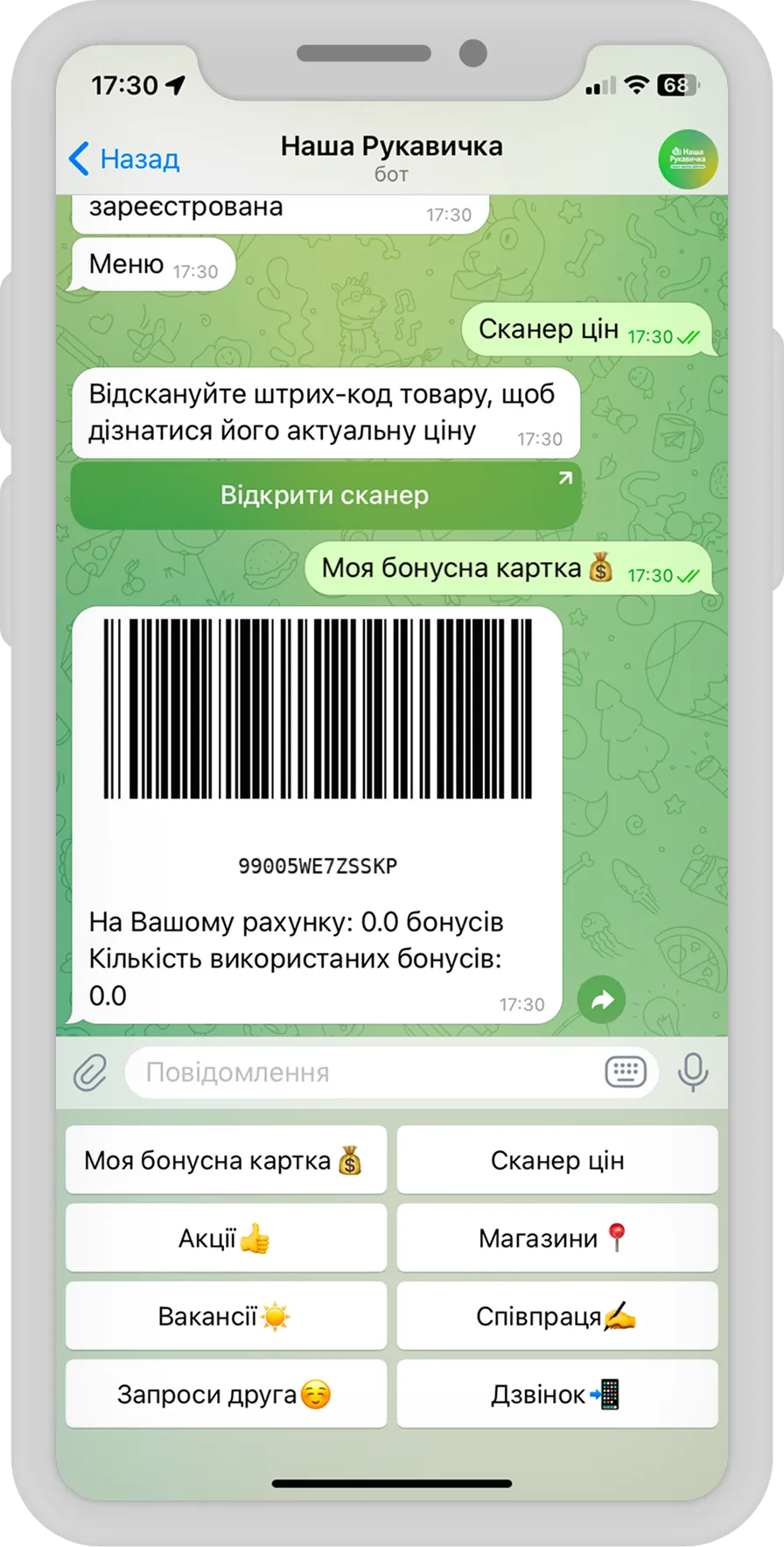
The clearest example of the first pattern is Nasha Rukavychka, a retail chain whose customer assistant replaced the plastic card outright. One chat holds the loyalty card, a barcode scanner that returns the current price and promotion for any item on the shelf, the store finder and opening hours, running promos, the referral programme, and even open vacancies. It is the whole customer-facing side of a chain in a channel the chain does not have to persuade anyone to install.
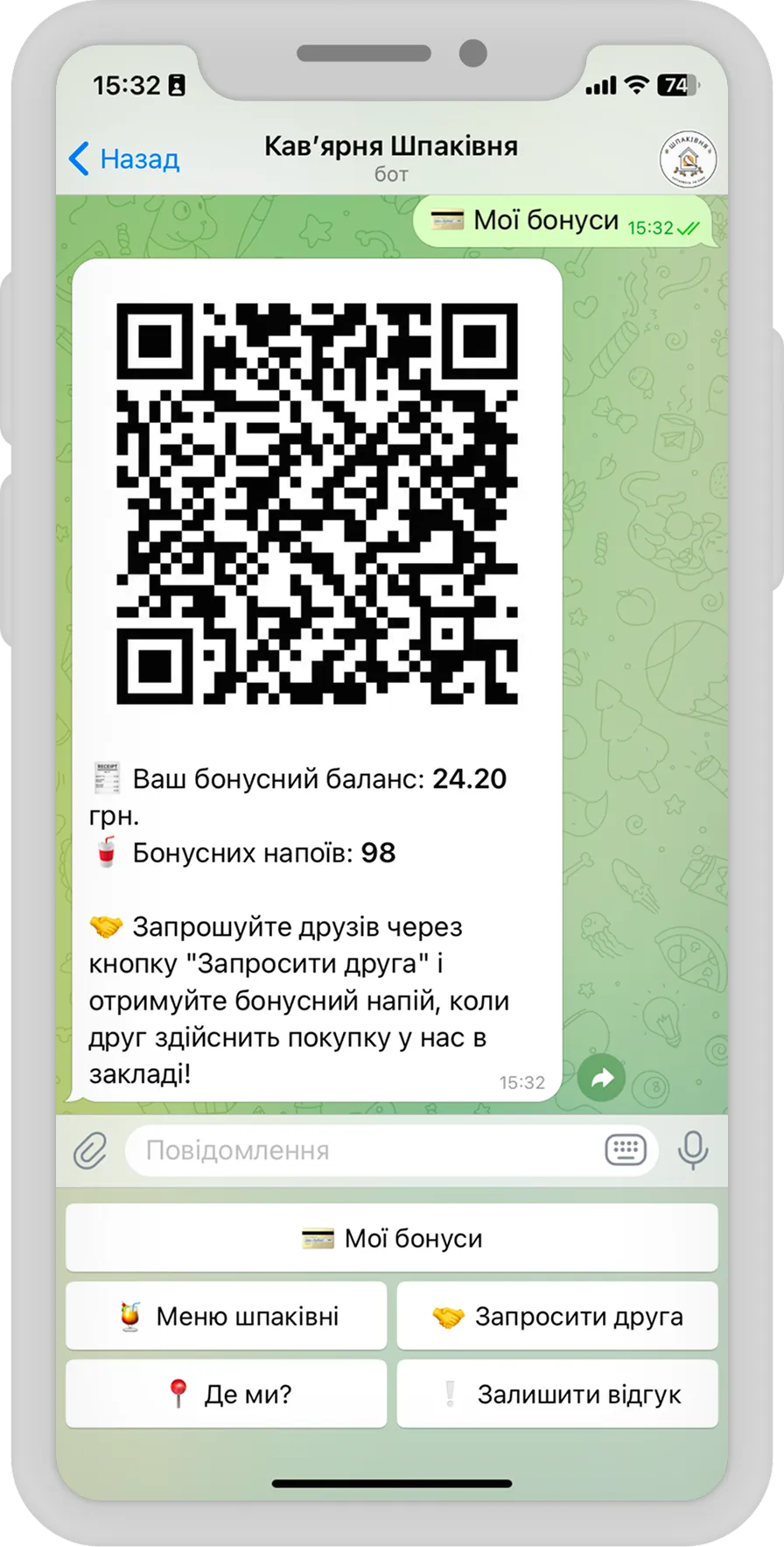
For a café and retail loyalty system we built the same idea around the till: QR scanning at the moment of payment, cashback accrual and spending, a referral loop that runs inside the chat, and synchronisation with the POS and CRM — so the bonus balance a customer sees and the one the cashier sees are the same number, without anyone re-keying it.
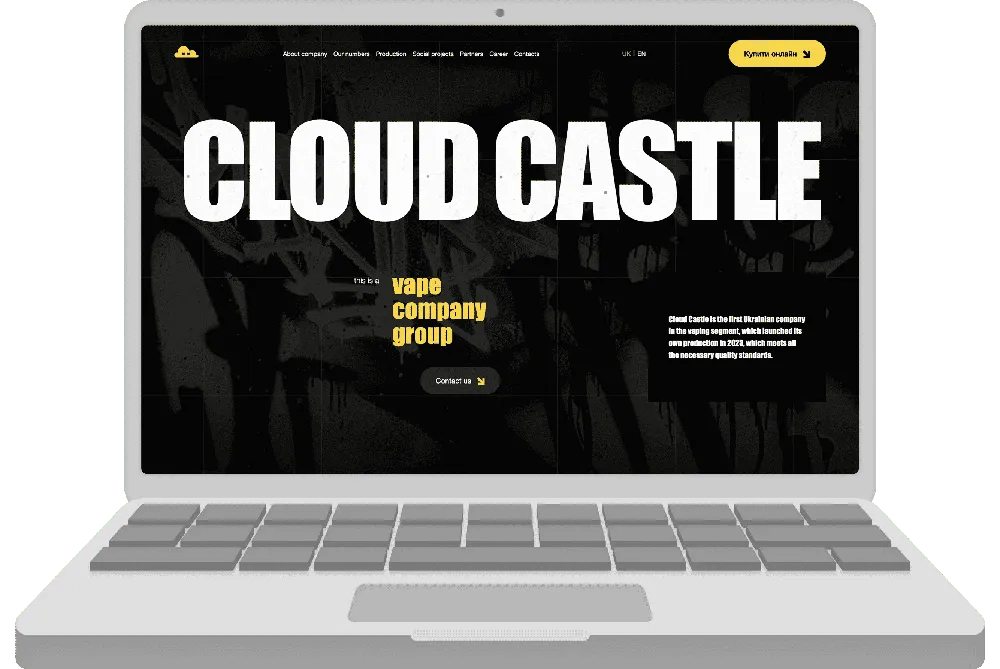
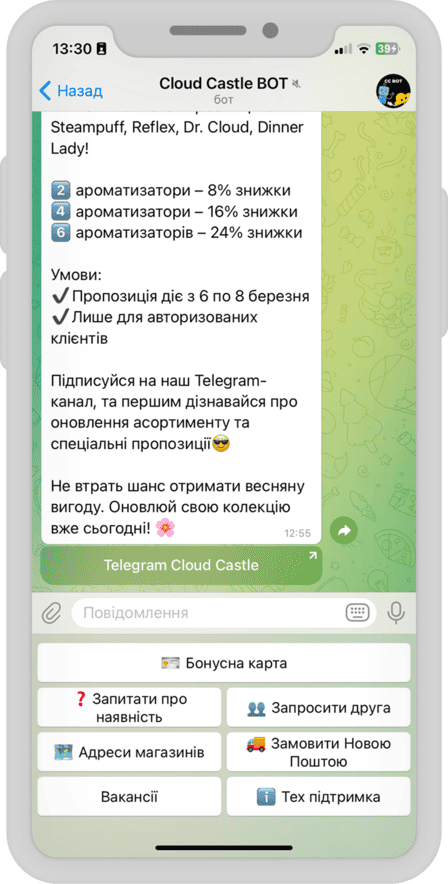
Scale is where the chat channel stops being a nice extra. For a premium vaping retailer with more than 7,000 SKUs across 59 stores, the Telegram bot we built serves 50,000+ customers with product search, ordering, store locations and bonus cards, and has taken over $5 million in orders; the conversion-focused landing page for the same business helped attract 40,000+ authorised customers. That is a store operating inside a messenger, not a widget bolted onto one.
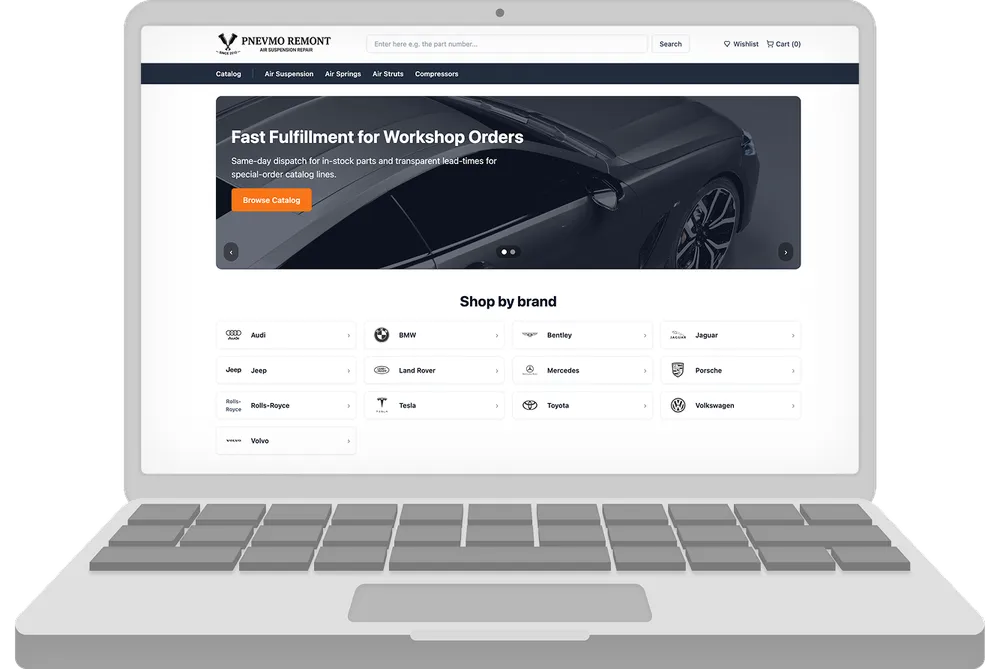
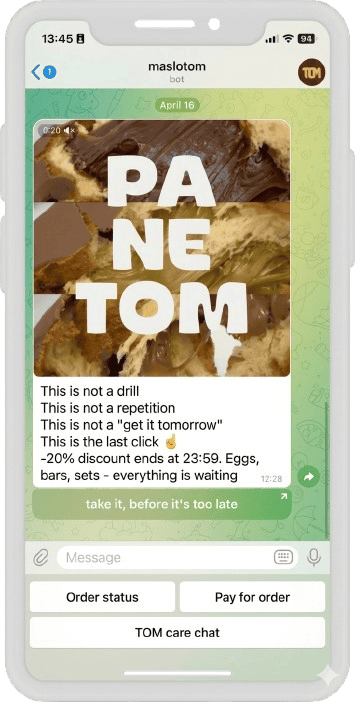
Support scales the same way. Maslotom's AI assistant answers product questions and manages orders, cancellations and delivery updates on its own, automating 80% of incoming requests — the remaining fifth reaches a human with the context already gathered. And when a retailer needs the full stack rather than a channel, we build it: Pnevmo remont runs on a custom online store with its own inventory management, CRM functionality, and shipping and payment integrations.
An honest note on scope. We are not a POS vendor and we do not sell tills, scanners or shelf hardware, and we do not resell a boxed retail ERP. Our work is the software around the equipment you already run: the customer-facing channel, the loyalty logic, the assistant, and the integrations that keep them all reading the same stock, price and bonus data. If your POS exposes an API or a database we can reach, we integrate with it rather than asking you to replace it — replacing a working till system is almost never where the return is.
With us, you get not just development, but a reliable technology partner ensuring your business success.
Technologies we work with *
Frontend:
 JavaScript
 TypeScript
 SASS
SASS
 CSS
CSS
 HTML
HTML
 TanStack
 Redux
Redux
 Tailwind
 Next.js
 React
React
Backend:
 Celery
 Flask
Flask
 aiohttp
 SQLAlchemy
 Python
 FastAPI
 Django
DB:
 MySQL
MySQL
 Kafka
Kafka
 RabbitMQ
 MongoDB
 Redis
Redis
 PostgreSQL
AI:
 LlamaIndex
 Qdrant
 ChromaDB
 Embed chain
 Copilot
 Gemini
 ElevenLabs
 Mistal
 OpenCV
 OpenAI
 LangChain
 Keras
Keras
 TensorFlow
Chatbot:
 Web
Web
 Instagram
 Messenger
 WhatsApp
 Viber
Viber
 Telegram
-
★★★★★
We always felt in control of the project timeline and scope.
-
★★★★★
I'm impressed by their great customer support.
-
★★★★★
What stood out most was their ability to combine technical expertise with a deep understanding of our business needs.
-
★★★★★
What impressed us the most is how they opened up incredible opportunities for our business.
-
★★★★★
What stood out to me was how easy it was to work with them.
-
★★★★★
Overall, our experience with Momentum Squads was very positive.
-
★★★★★
We are especially grateful that they became a partner of our charitable foundation.
-
★★★★★
I am happy, these people know their stuff.
-
★★★★★
What impressed us most about Momentum Squads was their young, energetic, and intelligent team.
Let's build an awesome project together!
Schedule a call with our team

Anton Yurash
CEO, Founder

Yevhen Panchoshniy
Business Development Manager
Frequently Asked Questions
What kinds of retail businesses do you work with?
Can we run a loyalty programme without printing cards or building an app?
Will it work with the POS and CRM we already have?
Can a chatbot really answer product questions for a large catalogue?
Can customers check a shelf price themselves?
We also need to sell online. Is that the same project?
How long does a retail chatbot or loyalty rollout take?
What happens after launch?
Get your project evaluated
Describe your idea, and we will help bring it to life